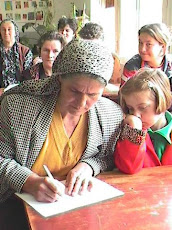
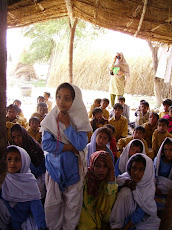
The Human Rights Advisory Committee published the findings of a study into the right to food in January. The report is very informative, providing some concise and powerful insights into the challenges facing women and girls - in particular, rural women.
Despite global efforts to combat extreme poverty through the Millennium Development Goals, one billion people continued to suffer from undernourishment, unable to realise their right to food due to underlying discrimination. For example, one case given is article 139 of the Labour Code of
Guatemala describes rural women as “helpers” of the male agricultural workers, rather than as workers entitled to receive their own salary which significantly impacts upon the ability of these women to feed themselves and their families.
States must ensure that all individuals have equal access to adequate food and to the means of its procurement, including women and girl children. However, this is still not the case and women and girls are disproportionately affected by hunger, malnutrition and associated diseases. A global increase in food prices in 2010 has made women and girls even more vulnerable to hunger with the FAO food price index reaching its highest level since 2008.
80% of the worlds hungry are believed to live in rural areas – subsistence farmers, landless workers, indigenous peoples and fisher folk suffer the most and again, women and girls are disproportionately affected. Women cultivate more than 50% of food globally, yet the report finds that “women account for 70% of the world’s hungry and are disproportionately affected by malnutrition, poverty and food insecurity. Governments are not living up to their international commitments to protect women from discrimination, as the gap between de jure equality and de facto discrimination continues to persist and resist change”. Furthermore, women own only 5% of land despite forming the majority of the agricultural workforce.
The report also finds that women’s role in the economy has been underestimated and their work in agriculture has long been invisible due to it being outside of the ‘formal’ economy. Women have been ignored as economically productive agents: “While policymakers have targeted population, health and nutrition programmes to women in their reproductive roles, they have neglected women as productive agents. Rural women have the world’s lowest levels of schooling and the highest rates of illiteracy in all developing regions; twice as many women suffer from malnutrition as men, and girls are twice as likely to die from malnutrition as boys”.
SI has been a supporter of the 1 Billion Hungry Campaign since its launch and our UN Representative to the FAO in Rome, Cinzia Palmi, has been proactive in advocating for the rights of women and girls within this sector. In November, SI was represented at a panel discussion where we were invited to share with delegates some of the many fantastic campaigning and practical actions Soroptimists have taken in support of the 1 Billion Hungry Campaign and Programme Focus Objectives 5 and 6. Visit the UN pages of the website to read more from the FAO and SI’s statement.
The FAO have announced that the theme for the 2011 council meeting will focus on the role of rural women in agriculture. Cinzia Palmi will be chairing an ad hoc NGO group who will host a side event drawing attention to the plight of rural women.
To support the 1 Billion Hungry Campaign please visit www.1billionhungry.org/
To read the full report please Click Here
Thursday, February 17, 2011


Wednesday, February 9, 2011
E-discussion on Education: Closing the Gap
An e-discussion on Education: Closing the Gap is being held from 1 February to 4 March, organised by the Department for Economic and Social Affairs (UNDESA), the United Nations Educational, Scientific and Cultural Organisation (UNESCO) and the United Nations Children’s Fund (UNICEF) and the UN Development Group’s MDG-Net forum.
The e-discussion is an open, multi-stakeholder forum for academia, policy-makers and practitioners to discuss a series of questions pertaining to the achievement of education and learning for all and for formulating concrete, actionable recommendations for consideration by the Economic and Social Council’s (ECOSOC) Annual Ministerial Review. If you are Soroptimist with this skill set, this may be of interest to you.
The e-discussion will focus on the following three topics:
The e-discussion is an open, multi-stakeholder forum for academia, policy-makers and practitioners to discuss a series of questions pertaining to the achievement of education and learning for all and for formulating concrete, actionable recommendations for consideration by the Economic and Social Council’s (ECOSOC) Annual Ministerial Review. If you are Soroptimist with this skill set, this may be of interest to you.
The e-discussion will focus on the following three topics:
- Quality in Education and Learning
- Access to Education
- Innovation in Education
An outcome document will be prepared summarising the ideas and action agenda produced by the e-discussion, which will be presented at the Global Preparatory Meeting (April 2011) and ECOSOC’s Substantive Session in Geneva (July 2011).
For all the details and information on how to participate, please CLICK HERE.
Tuesday, February 8, 2011
Getting Our History Right - Women and the UN

Torild Skard, Senior Researcher and Chair of the Norwegian Association of Women’s Rights has published a great article on the history of the UN, gender equality and inclusion called 'Getting Our History Right'. For those who want to know more about the history of women's issues at the UN and the establishment of CSW this is a must read!
Click this direct link to access the full document: Getting Our History Right: How Were the Equal Rights of Women and Men Included in the Charter of the United Nations?
(Painting by SI UN Representative to New York, Yoko Komori Olson)
Click this direct link to access the full document: Getting Our History Right: How Were the Equal Rights of Women and Men Included in the Charter of the United Nations?
(Painting by SI UN Representative to New York, Yoko Komori Olson)
Subscribe to:
Comments (Atom)

 Posts
Posts